


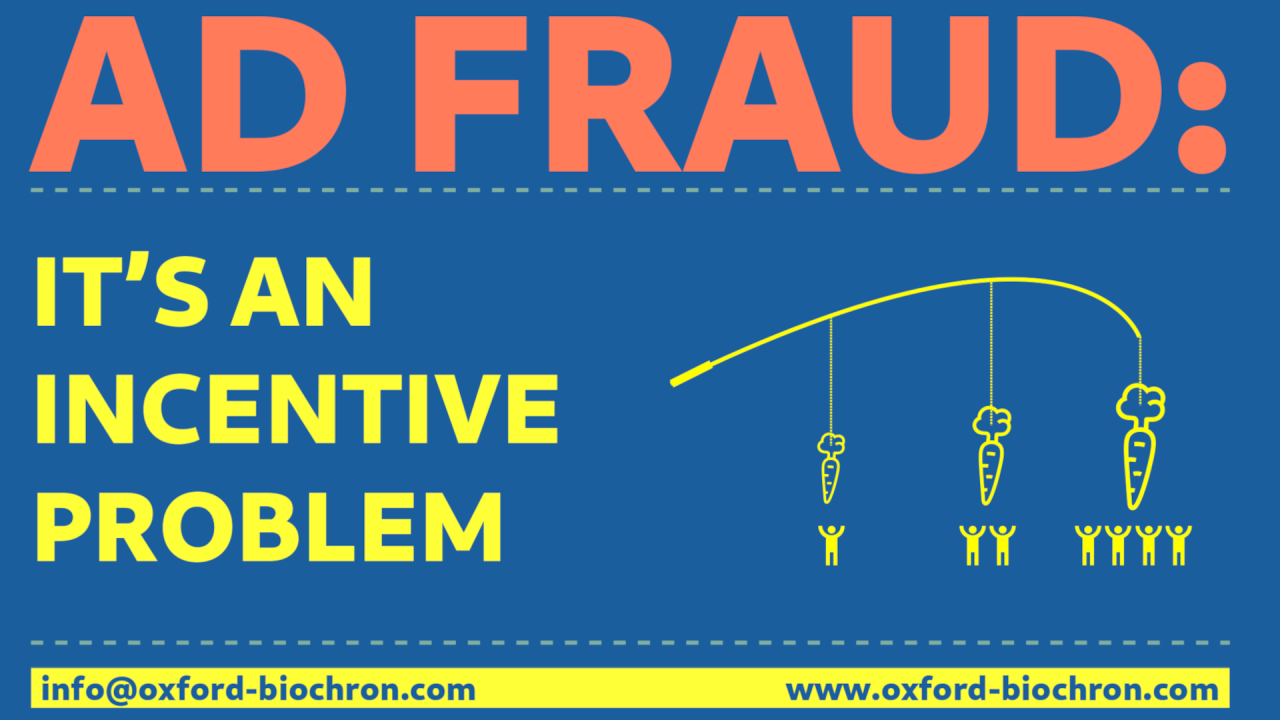
In colonial India the British government wanted to get rid of the large population of venomous cobras in Delhi. They offered a bounty for every dead cobra. Initially this was a successful strategy as large numbers of snakes were killed for the reward. However, people began to breed cobras for the reward as income. When the government became aware of this, the reward program was stopped. The cobra breeders set their snakes free, leading to an overall increase in the wild cobra population [1].
The goal to reduce the number of cobras failed because of exploitation due to perverse incentives.
Second example: “Boat trip to Australia in the late 1700s”
In the late 18th century British felons were transported by boat to Australia. A two month journey. Initially the British government paid sea captains per felon to be transported. After a few transports it became clear that the survival rate was very low. On average about 25% of the felons didn’t make the trip alive. The absolute minimum was a transport where 1/3rd of the felons didn’t make the trip. Something had to change. All kinds of different rules were made, eg. force captains to bring a doctor along, bring lemons to prevent scurvy, etc. None of it worked. [2]
Then a bright light had a new idea. Instead of paying for each felon that walked on the ship in Great Britain the government should only pay for each felon that walks off the ship in Australia. In 1793 this was adopted and implemented. Immediately the survival rate shot up to 99%.
Mission accomplished because of well aligned incentives.
Third Example: “Hoy No Circula”
In 1989 Mexico City implemented the “Hoy No Circula” or in English “[your car] does not circulate” policy also known as “no drive days” to combat severe air pollution [3][4]. The policy limits the number of vehicles allowed to drive on the road each day. Based on the last digit of the license plate, eg. on Monday’s license plates ending with 5 or 6, Tuesday 7 or 8, Wednesday 3 or 4, etc. vehicles are prohibited to operate from 5 am to 10 pm. Theoretically, this should reduce emissions and thus pollution with ~20%. Except, people started to buy an additional more polluting cheap second-hand car with, of course, a different license plate to drive on the day their primary car was banned.
Good for the automotive sector, not so for the environment.
Perverse incentives in digital advertising
When an attempted solution to a problem inadvertently makes the problem worse, because of non-moral human behavior like cheating, finding loopholes, and thus exploiting the system, etc. these perverse incentives are sometimes referred to as the cobra effect [5][6]. Such perverse incentives also exist in the digital advertising ecosystem. The digital advertising ecosystem has a tremendous waste due to the reluctance of many actors in the system looking away to solve the waste problem. Because to them more volume == more revenue. To them yes, but not to the advertiser!
Would you buy a bag of apples if ~20% looks rotten? No!? The reason advertisers accept this waste is because they can’t easily see and thus don’t know which apples are rotten and where the rotten parts are. This only becomes visible after solid and sound measurement and through analytics. Over time measurement of fraud becomes increasingly difficult as fraudsters learn from their mistakes and thus improve. Without advertisers or organizations representing the advertisers forcing the ecosystem to take care of the waste-in-ad-spend nothing will happen. The blindness (poor fraud detection tech, not knowing whether you really reach your intended audience, and others) and turning blind eyes (perverse incentives) by many in the ecosystem causes this form of digital advertising ecosystem waste, or rot, to persist.
In the digital advertising ecosystem the objective of the advertisers is: Spend money with the hope some future revenue will come. The objective of the vendors in the ecosystem is: Earning money with the promise of some future revenue to their clients (advertisers). The advertisers spend money in the ecosystem through display advertising, video, CTV, rich media, etc. The typical means to reach this objective is: More volume, which equals more future revenue. Advertisers pay for volume, hence the existence of volume based pricing models in digital marketing: cost per mille (CPM), cost per click (CPC), cost per lead (CPL), etc. The vendors in the ecosystem will thus optimize for... volume and volume only. And quality? That is much harder and more expensive, especially at scale. So, quality goes south at scale. At least for a fraction of the volume.
Looking at the WOAS (Waste On Ad Spend) due to ad fraud and the projected annual increase of ad fraud clearly show that the current route to solve this problem is naive and just doesn’t work. In 2016 the WFA predicted the total $ damage of ad spend lost due to fraud in 2025 would be ~$50 billion [7]. Since we’re almost halfway 2026, let’s take a look how well they predicted. A research report that Juniper Research released in 2023 claims that 22% of ad spend is lost due to fraud [8]. This means $85 billion dollars for 2023, about $100 billion for 2024, and about $116 billion for 2025 [9]. It seems there’s a mismatch between the original WFA prediction and the harsh reality of only 232%.
It is clear that brands (at the C-level) don’t want to waste marketing spend. But, the incentives of the departments and individuals doing the actual marketing work might conflict, ie. more impressions == reaching KPIs, more clicks == reaching KPIs, more leads == reaching KPIs. These incentives are clearly misaligned when you don’t look at the quality of the clicks. It’s very easy to have incentives purely based on volume, but it’s hard to measure the quality per impression, click, generated lead. Without quality these are nothing more than vanity metrics. So, why do these single-dimensional volume-only metrics (still) exist? It may be due to 1) ignorance, 2) looking only at reaching short term goals (and thus bonuses), and 3) if campaigns are steered towards quality the prices go up which feels counterproductive.
Another problem, called principal-agent problem [19], typically arises when two parties have different interests and thus misaligned incentives. One first party is the brand. The other party runs the digital advertising campaigns. Without controls this might lead to optimization towards the incentivized (volume) and not quality. In digital advertising inferior quality means synthetic audience (cheap to generate), fake websites / MFA websites (cheap to generate), bot traffic (cheap to generate), and many other ways. In other words: Low quality.
Bad behavior isn’t punished
“Bad behavior is intensely habit-forming when it’s rewarded.” -- Charlie Munger
“Incentives will always trump moral duty.” -- Charlie Munger
Charlie Munger said “Bad behavior is intensely habit-forming when it’s rewarded” and “Incentives will always trump moral duty”. That’s exactly what we can see in digital advertising: Bad behavior has become a habit for a lot of actors. Because it isn’t punished and money is paid anyway the total WOAS on ad fraud persists and has grown way beyond the 2016 WFA prediction.
“Show me the incentives and I’ll show you the outcome.” -- Charlie Munger
So, let’s map out the incentives of the actors digital advertising ecosystem. Figure 1 shows the ecosystem and how information flows through the digital advertising ecosystem. It’s a simplified version. In the real-world many more actors are involved. The yellow arrows show how information flows, the orange arrows the money, and the blue arrows how user data flows (cookies, device fingerprints, tracking, etc).
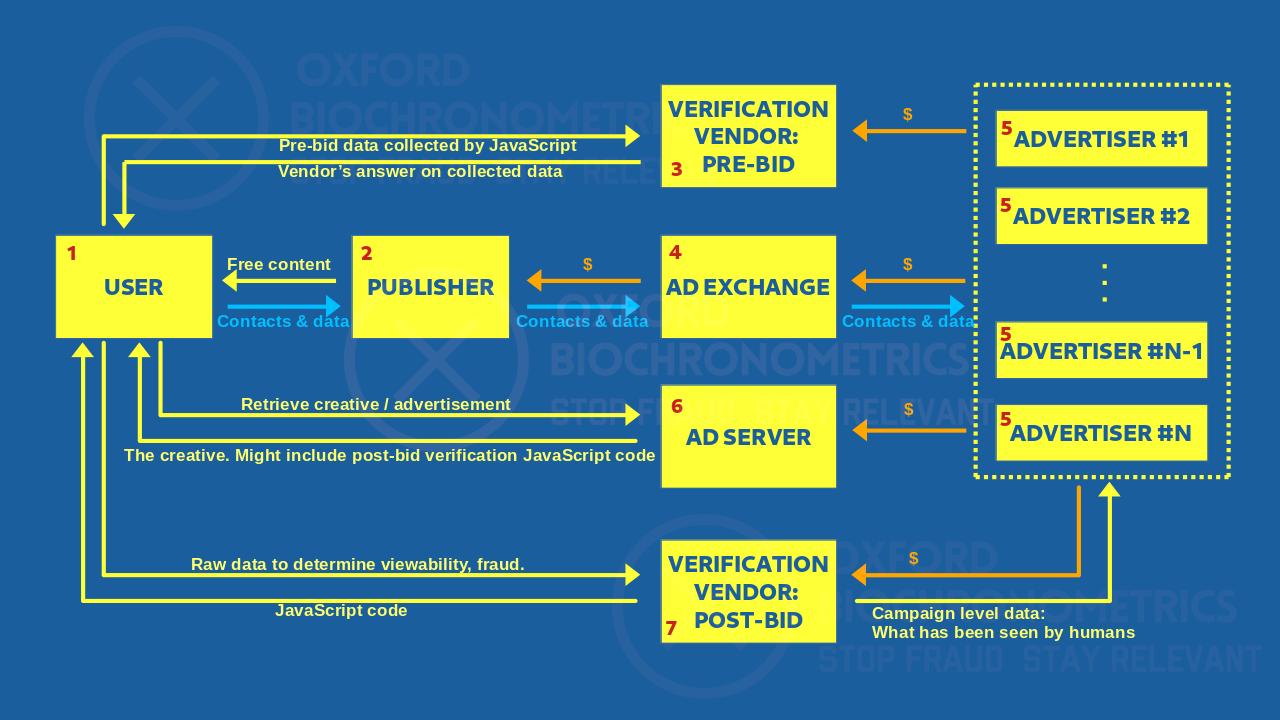
The user goes to an URL and loads a web page in a browser. This page contains advertisements. JavaScripts in the page will start the pre-bidding based on cookies, device fingerprint, Geo, etc. In social media/ walled gardens this step doesn’t exist.
The publisher/ platform returns the content for free. The user will get a tracking cookies, the browser is being fingerprinted and if advertisements are loaded and viewed and/or clicked the publisher/ platform gets its attribution.
If applicable, a verification vendor will determine whether the user is a bot, the website is not brand safe, MFA, etc. If this is the case during pre-bidding the browser will NOT load advertisements.
If human, the ad exchange will run an auction based on the user’s profile (cookies, device fingerprint, geo-location of the user, etc) and returns info on the advertisements that won the auctions to be put in the available ad slots.
The advertiser runs campaigns and sets bidding thresholds, Geo restrictions, configures targeted audience, etc. And, not to forget, pays all parties in the ecosystem.
The winning bids get advertisements. The creatives are loaded in the ad slots and are retrieved from the ad server/ CDN.
In case post-bid verification runs, a JavaScript collects browser integrity data and viewability data from the user’s browser. This data is conveyed to the verification vendor, processed, aggregated and eventually goes to the advertiser.
Figure 1 shows how information flows through the ecosystem. The information primarily flows from the user into the ecosystem and finally (aggregated) to the advertiser. The money flows from the advertiser into the ecosystem. For each party in the ecosystem the incentives are:
Publishers: The more visitors and thus more page views, the more revenue
Ad exchanges: The more bids made on available ad slots the more revenue
Marketers: To reach KPIs more impressions, more clicks and high CTR is better
Verification vendors: The more verifications the more revenue
Advertisers: The more we spend on advertising the more revenue?
Users: The more advertisements, the slower load times, more tracking
The weakest links are clearly the user and the advertiser. They advertiser pays for everything and in return they get potential human eyeballs and consumer data to target. Their incentive: More potential customers enables brands to sell more of their product to meet the revenue targets. And the user? Over time the user pays this through increased prices.
So, what could possibly go wrong?
So, what could possibly go wrong? For starters, users install ad blockers. Secondly, advertisers have to believe (very naive) that all actors in the ecosystem work directly and indirectly on behalf of them and that interests are aligned. Subsequently, if the outcome is not the expected outcome these actors/vendors will have many excuses, which are hard to verify. Simply because you don’t know how and whether poor quality traffic (GIVT/ SIVT) is a result of poor configuration (no strict Geo, loose audience configuration, no whitelists, etc.), poor creative, but also low quality audience and/or traffic added by actors in the ecosystem, etc.
Poor quality traffic (GIVT/ SIVT) is mostly based on bots, and/or MFA sites visited by bots and is outright fraud. Data derived from this (Fraudulent clicks, fake leads, fake installs, MFA sites, fake streams, fake apps, etc) is worthless data, but without good detection this data is being sold as genuine. According Juniper Research the waste is prevalent, ie. 22%. Then, why does this data derived from fake sources exist at all?
When targeting a specific audience brands pay to be seen by that specific audience, for example, men (shaving products) or women (bikinis). How can you as a brand validate that your ads were seen by your target audience? Or in a more specific case if your target audience is general practitioners/ doctors, HR managers, high-net-worth individuals for luxury goods? it is mostly based on trust, eg. the promise of “trust us, we advertise where your audience resides online”.
Another quality metrics is, if you target a certain state or city, did you reach that state or city? The geo-location of IP addresses can be tricky as over time IP address blocks may be sold or bought and if your targeting service uses an old IP-to-location database strange things can happen. For example, in the US insurance companies have licenses per state. This means showing ads in a different state (or different country) would be a waste. In some industries targeting the wrong state or country could be a compliance risk (eg. farmaceutical).
A third quality metric is: If you do reach a human, did you reach your intended audience? If you target adult males do you reach adult males? If you target a niche audience and pay a lot for it (doctors, lawyers, C level executives, etc), did you actually reach your intended audience?
The promises of advertising are big and it seems that everybody (compounded) in the ecosystem makes more and more money, only because more volume promises more revenue.
Except, the advertiser is the big loser in the current ecosystem setup! They’ll pay for everything and (still) can’t objectively verify the quality of the service provided by other vendors in the ecosystem. They have to rely on 3rd party verification vendors that have misaligned incentives and the new panacea in 2026 is... AI. Don’t. Believe. It!
Change the incentives: Mystery guest testing
So, what can be done? It’s as simple as changing the rules and pay the captain only for felons that walk of a ship at the destination port. To change the incentives in the digital advertising ecosystem let’s set some baseline rules:
Never pay for fraudulent traffic. Contact Legal and change your contracts and add: Refuse to pay for fraud! Nobody can disagree with this
No party should be allowed to verify their own product. Never trust, always verify!
The financial compensation of the verification vendor should be incentivized by accuracy
Continuous testing your vendor(s) to determine continuous accuracy
A higher financial compensation based on how accurate ad fraud is detected incentivizes a good fraud detection and continues improvement. In order to verify the verification vendor a continuous mystery guests test needs to be run. The continuous mystery guests (visitor quality) test should be setup like this:
Run a decent sample 10,000 (or 20,000, or 50,000) page views where 50% humans and 50% bots load pages with advertisements. This can be per day, or per week.
Only the organization running the mystery guest test knows which page on which URLs was loaded by a bot and which was viewed by a human.
The verification vendor will determine human or fraud for those requests. If the verification vendor has a up to date, solid and sound fraud detection engine they’ll be able to separate the fraud from the human traffic correctly.
The higher the accuracy, the better the financial compensation for detecting fraud. A higher quality is reflected in a higher price per verification.
Because testing is continuous and blends in with regular traffic cheating by the verification vendor is hard.
The outcome of the continuous mystery guest enables the advertiser to decide whether a verification vendor suffices and/or what price they are willing to pay and/or which verification vendor they choose.
The mystery guest team should be incentivized by getting some additional bonus when their bots are NOT detected by a verification vendor. Run bot creation contests and/or a generic contests to show how to siphon money from the ecosystem. This is similar to how Microsoft/ Google/ etc. reward security researchers for zero day exploits. The prize money should be enough to attract innovative startups and/or students and/or experts.
I’m hearing some thoughts. Why does the mystery guests test include both humans and bots? Only then you are able to determine both false positives and false negatives. How else would you know when regular humans are flagged as fraud? Another thought? Yes, bots made by fraudsters are not necessarily the same bots as mystery guest bots. Agreed. These days most browser based bots are based on the same publicly available code on Github, for example these links [12][13]. Only few fraudsters develop their own bots from scratch, but I agree that the latter scenario is very possible since the profits are high enough. That’s why a good mystery test should never run a single type of bot. It should be based on a mix of OSes, devices and browsers matching real traffic patterns. Otherwise the traffic itself might become a statistical outlier.
When these mystery guest bots get detected by the improved fraud detection it becomes more expensive to run ad fraud operations at scale. Only, when the detection has become that good that the risks, costs, and investments of infrastructure, proxies, fingerprints, bot development exceeds the profits made by ad fraud the problem starts to shrink.
Similar to invalid traffic the same can be achieved for audience fraud. Run mystery guest tests to see how well certain audiences are targeted, were your advertisements shown in the targeted Geo only.
This might be hard to setup correctly, but it is doable. And what should be avoided is the “Hoy no circula” scenario where actors in the ecosystem start working around the mystery guest tests and continue their schemes as business as usual.
Red team | Blue team
This model resembles the red team [10] vs. blue team [11] which is common in cyber security companies. The red team simulates an adversary while the blue team protects security systems by analyzing, identify security flaws, etc.
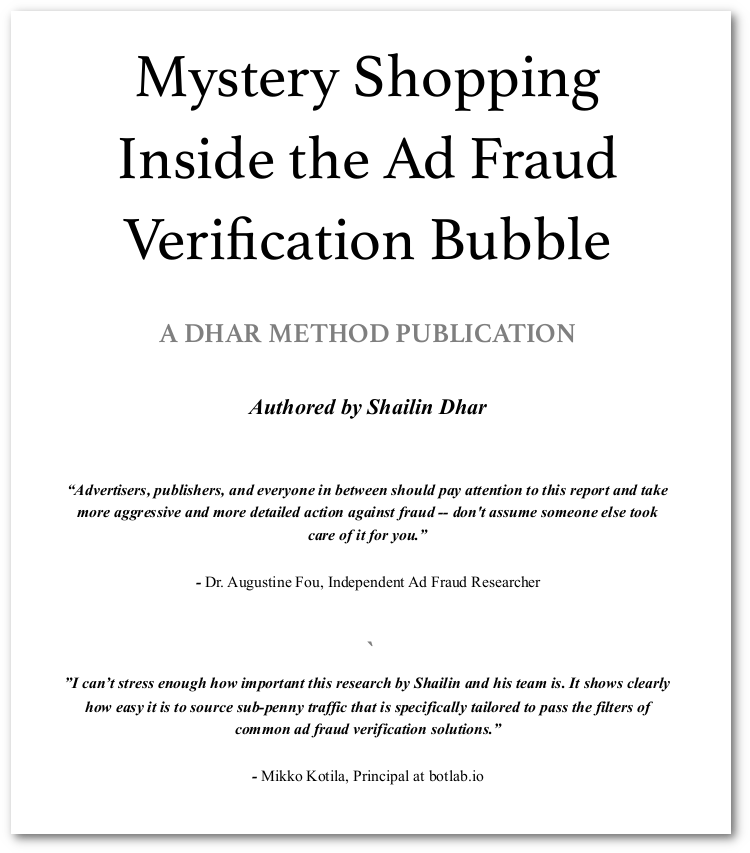
From wikipedia: “Mystery guest or mystery shoppers are common to test the consistency of the habits deemed important to a specific brand or industry“ [17]. Already ten years ago a mystery guest test was executed to compare and rank multiple ad fraud verification vendors. This research document is still available online and named “Mystery shopping in the Ad Fraud Verification Bubble”, see this link [16].. and if you’re going to read it, also take a look at page 18.
Who should be organizing, running and managing these mystery guest tests?
The looming question is: Who should be organizing, running and managing these mystery guest tests? IAB? ANA? WFA? AAAA? And if so, who’s going to govern this? Enforce this? Or because of the high financial stakes should it be a government task? Similar to the Enron and Worldcom accounting scandals resulting in updated the accounting rules in 2002 through the Sarbanes-Oxley Act [18]. And, how does this solve the ecosystem’s waste problem at large, as fraud/waste will like move to an unregulated part of the ecosystem?
Continuous improvement
To give you some background. Oxford Biochronometrics fraud detection has continuously been tested for accuracy by our clients. in the beginning we were not really happy about that, but over time you update your processes from reactive to pro-active to stay ahead and catch fraud the moment fraudsters are developing/ testing it. Since, we’re primarily in lead generation it is relatively easy to measure quality and thus accuracy. This is how the process works in lead gen. When a lead has been generated and you follow up (telephone call) the lead and realize it was fraudulent: This is a false negative (FN)! When a lead has been flagged as fraudulent: Manually verify the lead. If it wasn’t fraud it’s a false positive (FP)! And tallying the FNs and FPs up over a rolling two to three months gives a good picture at scale. You don’t have to verify everything, but verifying a randomly selected percentage is more than enough to paint the accuracy picture.
As mentioned in the last paragraph, Oxford Biochronometrics has been A/B tested against other verification vendors. This is exactly how our product has proven itself to be superior and why we stayed in business, it also kept us sharp to detect fraud without false positives.
Conclusion
Remember: The digital advertising ecosystem is setup to incentivize more volume == more revenue. The advertiser sees lower prices per impression, click, and generated lead, without realizing the quality of these impressions, clicks and generated leads is poor (at its best). Humans are limited, bots are unlimited and available on demand.
Incentives can push vendors in the digital advertising ecosystem to a more accurate fraud detection, which will result to less waste, a better visitor quality, and thus more value per impression, click, generated lead, etc.. As money flows this should trickle down to the middlemen. If an impression is not being paid for because of fraud, the auction, bidding, etc. should also not be paid for. Not paying for it means the risk of costs goes up, ie. processing happened but not being paid. Verification vendors need to be compensated more for quality (measured by accuracy) than volume based. Use mystery guest tests to determine the accuracy of verification vendors. In order to survive verification vendors need to ramp up their tech and detection capability, or become irrelevant. Finally, the advertiser wins and the digital advertising equivalent of the cobra breeding program (breeding cobras == breeding fraud and bots) can be put to a halt.
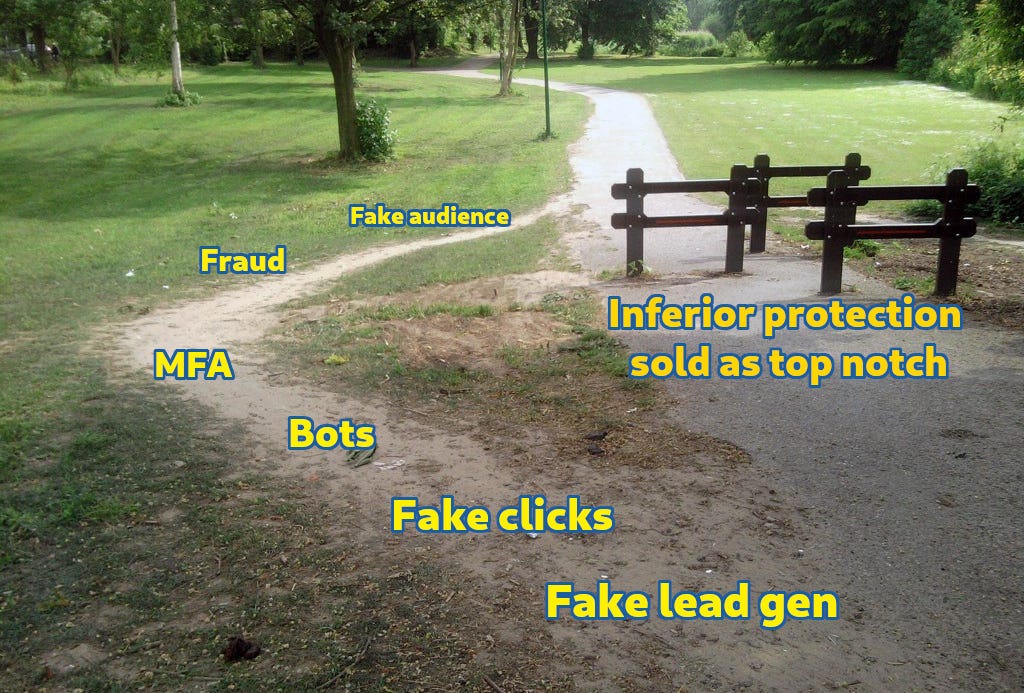
At this moment the ecosystem doesn’t have any incentive to improve quality [14], other than ads.txt and app-ads.txt, lists of bot user agents, data center IP ranges. These lists are static, which can be circumvented easily. The legacy verification vendor arguments are: Trust us, we know what we’re doing. Use us and we save you billions of dollars. But, detecting ~1% fraud doesn’t mean almost no fraud exists!
Fraud detection in the pre-bid stage is very limited. In this stage almost no reliable data is available that can be used in the detection. So, why does it exist? Because more volume == more revenue. Fraud detection in the post-bid stage can easily be bypassed using public available software from github [12][13], or can be developed specifically to bypass a fraud detection vendor. Like spear phishing, this can be seen as spear botting. Fraudsters exactly know which data will pass a (naive) fraud detection, and the result is: Almost no fraud is detected, but that doesn’t mean it doesn’t exist!
“The most important rule in management is getting the incentives right.” -- Charlie Munger
Getting the incentives right in the digital advertising ecosystem will be hard. Nobody is going to slaughter their current golden (read: botnet) goose that lays (read: impressions, clicks, leads) golden eggs. Except, money talks. The advertiser ultimately pays all parties in the ecosystem.
Similar to breeding cobras for the bounty, bad actors in the digital advertising ecosystem breed bot traffic, ignore frequency caps, create MFA sites, free game or stream (sport) video apps that load ads in the background, etc. By changing the incentives from blindly paying for any impression, click, or generated lead to paying only for non-fraudulent impressions, clicks and generated leads verified by a vetted (using mystery guest test) verification vendor quality can be incentivized.
Advertisers should be able to force change by moving their ad dollars towards less fraud and thus less WOAS. But, that’s easier said than done. Because how do they know where the waste is? It’s not just as simple as only paying for felons walking off the ship in Australia. It is impossible to verify every impression, click or generated lead.
So, it is important is that the quality metric needs to be verified independently using continuous mystery guest testing. This not just applies to programmatic advertising, but should also applies to the walled gardens. The consequences will be that the total volume in the ecosystem will be lower, simply because human supply is limited and also advertisers with big budgets are limited. The price per impression, click, generated lead will increase due to limited number of humans. Again, that’s perfectly fine, because paying for fraud (bots, MFA, fake ... ) only makes the cheating ecosystem vendors and fraudsters rich.
“He that will not apply new remedies must expect new evils.” -- Sir Francis Bacon, 1597
Last question remains: Who is going to organize, manage and conduct the ad fraud mystery guest tests? Let me know in the comments.
2026-06-09
Glossary
CDN - Content Delivery Network
CPM - Cost per Mille / per 1000 impressions
CPC - Cost per Click
CPL - Cost per lead
CTR - Click-Through-Rate
CTV - Connected TV
GIVT - General invalid traffic
MFA - Made for Advertising
SIVT - Sophisticated Invalid traffic
WFA - World Federation of Advertisers
WOAS - Waste on ad spend
[1] https://en.wikipedia.org/wiki/Perverse_incentive
[2] https://www.eastridingmuseums.co.uk/museums-online/convict-connections/convict-transportation/
[3] https://en.wikipedia.org/wiki/Hoy_No_Circula
[4] https://www.bbc.com/news/science-environment-38840076
[5] https://www.historic-uk.com/HistoryUK/HistoryofBritain/Cobra-Effect/
[6] https://en.wikipedia.org/wiki/Perverse_incentive
[7] https://www.thedrum.com/news/2016/06/06/wfa-warns-ad-fraud-will-hit-50bn-year-2025
[8] https://fraudblocker.com/wp-content/uploads/2023/09/Ad-Fraud-Whitepaper_Juniper-Research.pdf
[10] https://en.wikipedia.org/wiki/Red_team
[11] https://en.wikipedia.org/wiki/Blue_team_(computer_security)
[12] https://github.com/Kaliiiiiiiiii-Vinyzu/patchright
[13] https://github.com/kaliiiiiiiiii/Selenium-Driverless
[14] https://www.tagtoday.net/insights/usadfraudsavings2024 ,
[16] https://www.slideshare.net/slideshow/mystery-shopping-inside-the-adverification-bubble/62857862
[17] https://en.wikipedia.org/wiki/Mystery_shopping
[18] https://en.wikipedia.org/wiki/Sarbanes%E2%80%93Oxley_Act
[19] https://en.wikipedia.org/wiki/Principal%E2%80%93agent_problem